Free printable activity sheet
Turn your photos into sheets like this!
Upload any photo and apply our Coloring Book style to generate a custom printable sheet of your own.
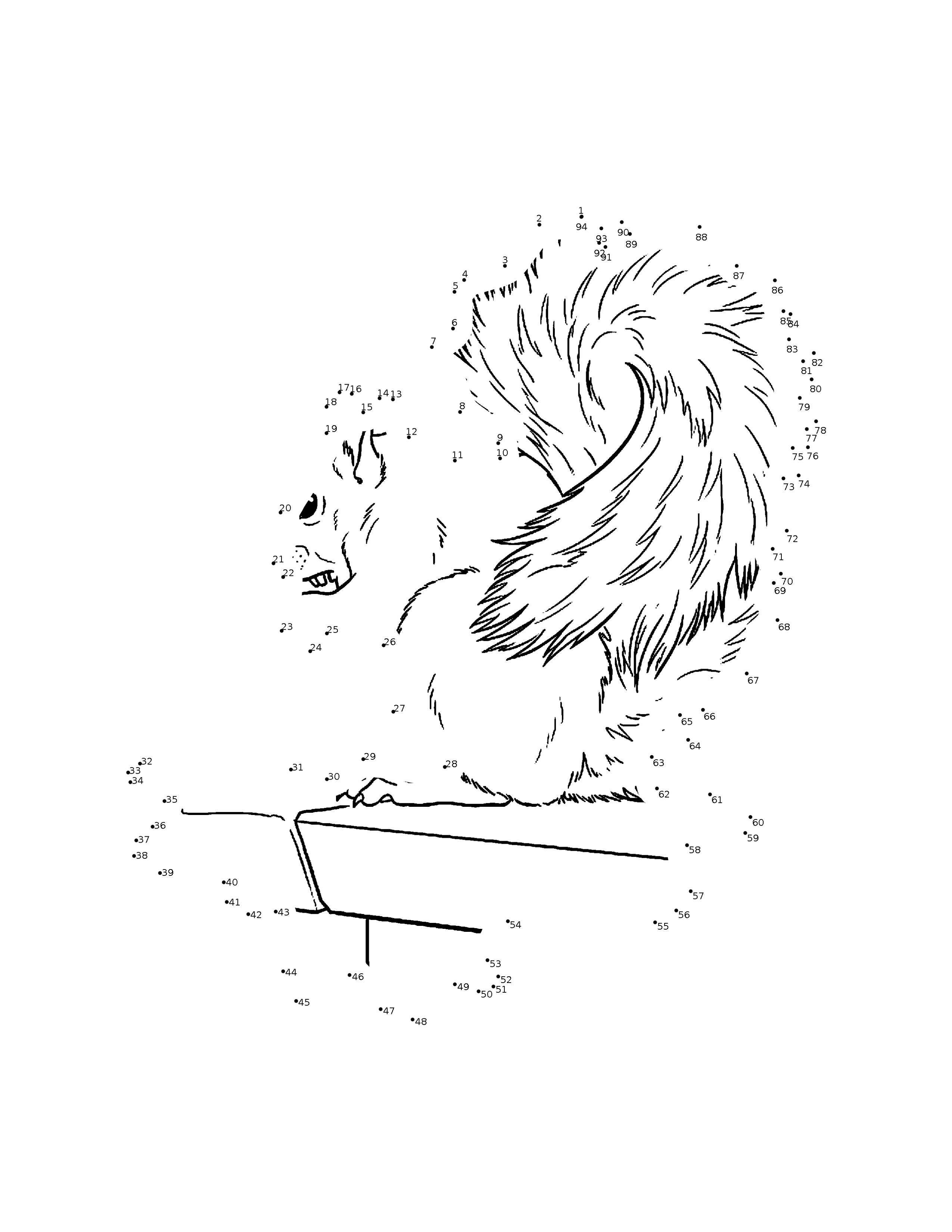
Create My OwnWestern Gray Squirrel Dot-to-Dot
Connect the dots to reveal a long-tailed tree squirrel from western forests and oak woodlands.
About
The western gray squirrel is a tree squirrel found in parts of the western United States. It is known for its soft gray fur, pale belly, large eyes, and very long bushy tail. That tail helps the squirrel balance as it climbs, leaps between branches, and moves through the forest canopy.
Western gray squirrels spend much of their time in trees, but they also come to the ground to look for food. They eat acorns, pine seeds, nuts, berries, fungi, and other plant foods. Like many squirrels, they may bury food in the soil and return later when meals are harder to find.
Healthy forests and oak woodlands give western gray squirrels places to nest, hide, travel, and gather food. When you finish the dot-to-dot, look for the animal's rounded ears, curved back, tiny paws, and sweeping tail shape.
History & Culture
Western gray squirrels have long been part of forest and oak woodland ecosystems along the Pacific side of North America. By carrying and burying acorns and seeds, squirrels can help move plant material around their habitat.
In many communities, squirrels are familiar wildlife neighbors. Learning to observe them quietly helps people notice how animals use trees, branches, nests, and seasonal food sources without disturbing their daily routines.
Fun Facts
A western gray squirrel's long tail helps it balance on branches.
Western gray squirrels often eat acorns, seeds, nuts, berries, and fungi.
Squirrels may bury food and find it again later when they need a meal.
Tree squirrels build leafy nests, often high above the ground.
A Thought to Carry With You
"Careful steps can turn scattered dots into a clear picture."
Activities & Discussion
- 1
Connect the Squirrel
Start at number 1 and connect each dot in order. When the outline is complete, trace the tail, ears, paws, and body so the squirrel shape stands out.
- 2
Add the Habitat
Draw an oak branch, pine cones, leaves, or acorns around your finished squirrel. Add one hiding spot where a squirrel could rest or watch safely.
- 3
Counting Check
After connecting the dots, circle every tenth number. Use those marked points to describe the path your pencil took around the squirrel.

