Colored Pencil
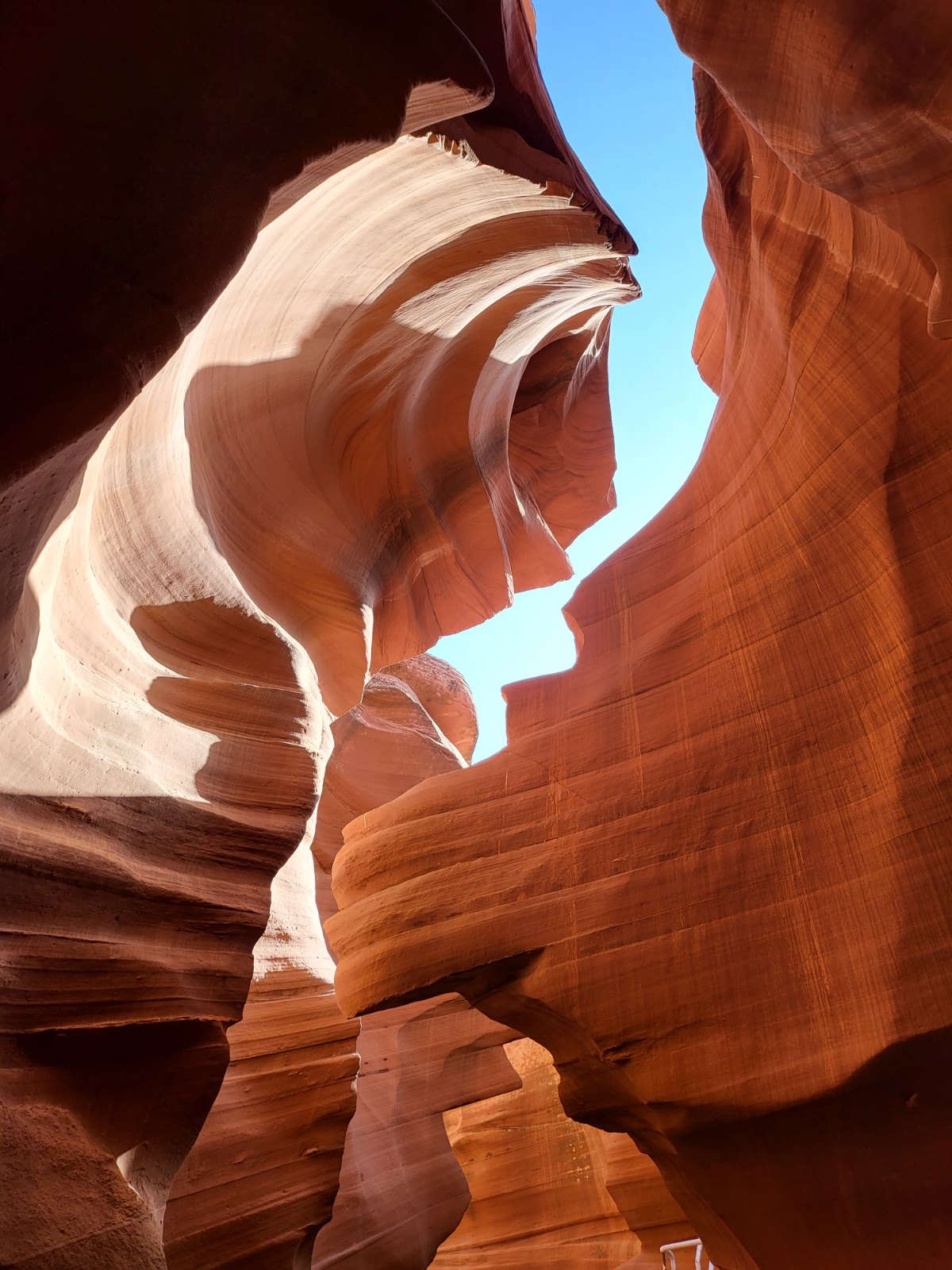
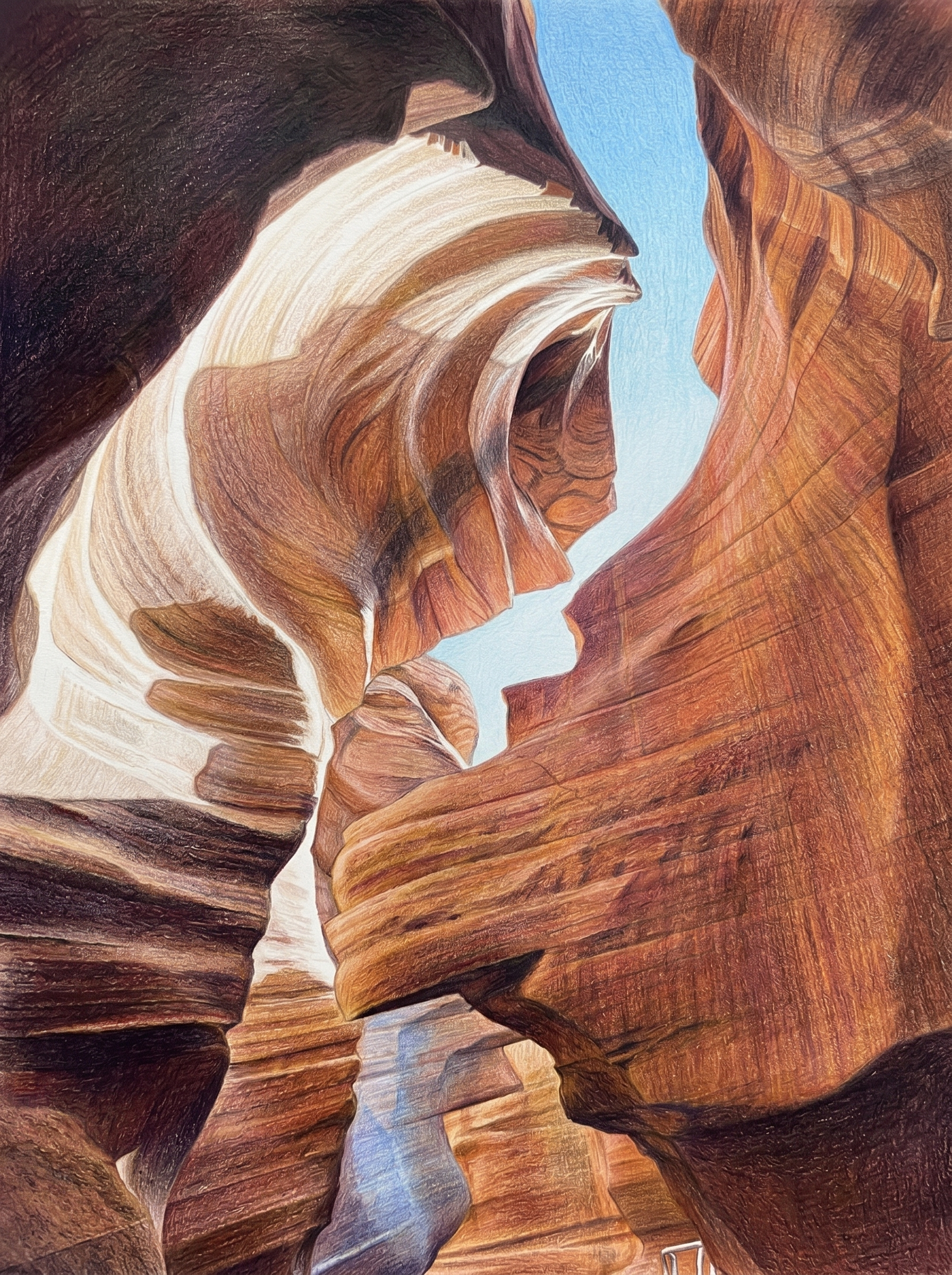
Antelope Canyon narrows into flowing walls of sandstone, where warm orange, copper, rose, and violet tones shift with every bend. Light drops from above in soft ribbons, touching the canyon floor and revealing curves carved by water, wind, and time.
This Arizona slot canyon lies on Navajo land near Page, within the broader landscape of the American Southwest. Its smooth walls were shaped as floodwater rushed through narrow passages, carrying sand and debris that gradually deepened and polished the Navajo Sandstone. The same force that makes the canyon dangerous during sudden storms also gave it these sculpted, wave-like forms.
Inside the passage, the space feels enclosed and luminous at once. Smooth rock folds rise like waves on either side, their edges catching highlights while deeper turns hold cool purple shadow. Each layer of stone adds movement, as if the canyon is slowly turning around the light.
Antelope Canyon is known for the way sunlight enters from openings above, creating glowing walls and, at certain times, dramatic shafts of light. In a narrow slot canyon, even small changes in sun angle transform the color of the rock, making the passage feel gold, red, lavender, or almost bronze from one step to the next.
Beauty here belongs to an active, living desert system. Flash flooding remains part of the canyon's story, and guided access helps protect visitors while respecting the land and its Navajo stewardship. The sandstone, shadow, and light are inseparable from geology, weather, culture, and time.
The drama comes from contrast: bright openings overhead, dark passages below, and sculpted sandstone surfaces between them. Antelope Canyon holds a quiet wonder inside the stone, inviting attention to texture, movement, and the fragile glow of light in a narrow place.
How This Was Generated
To create a similar Antelope Canyon look in FotoMedley, start with a source photo that has strong light direction and clear sandstone detail.
- Choose the Colored Pencil style for layered texture, visible strokes, and a hand-drawn finish.
- Use a photo with curved canyon walls, strong shadows, and warm color variation in the rock.
- Crop vertically if the image emphasizes height, light beams, or narrow passageways; crop wider if the scene is about sweeping wall shapes.
- Keep the original image high resolution so fine sandstone lines and color bands stay crisp.
- Preview for balance: the best results preserve both the glowing highlights and the darker interior shadows.
For best results, choose photos with clean composition, rich natural color, and a clear focal path through the canyon.