Oil Painting
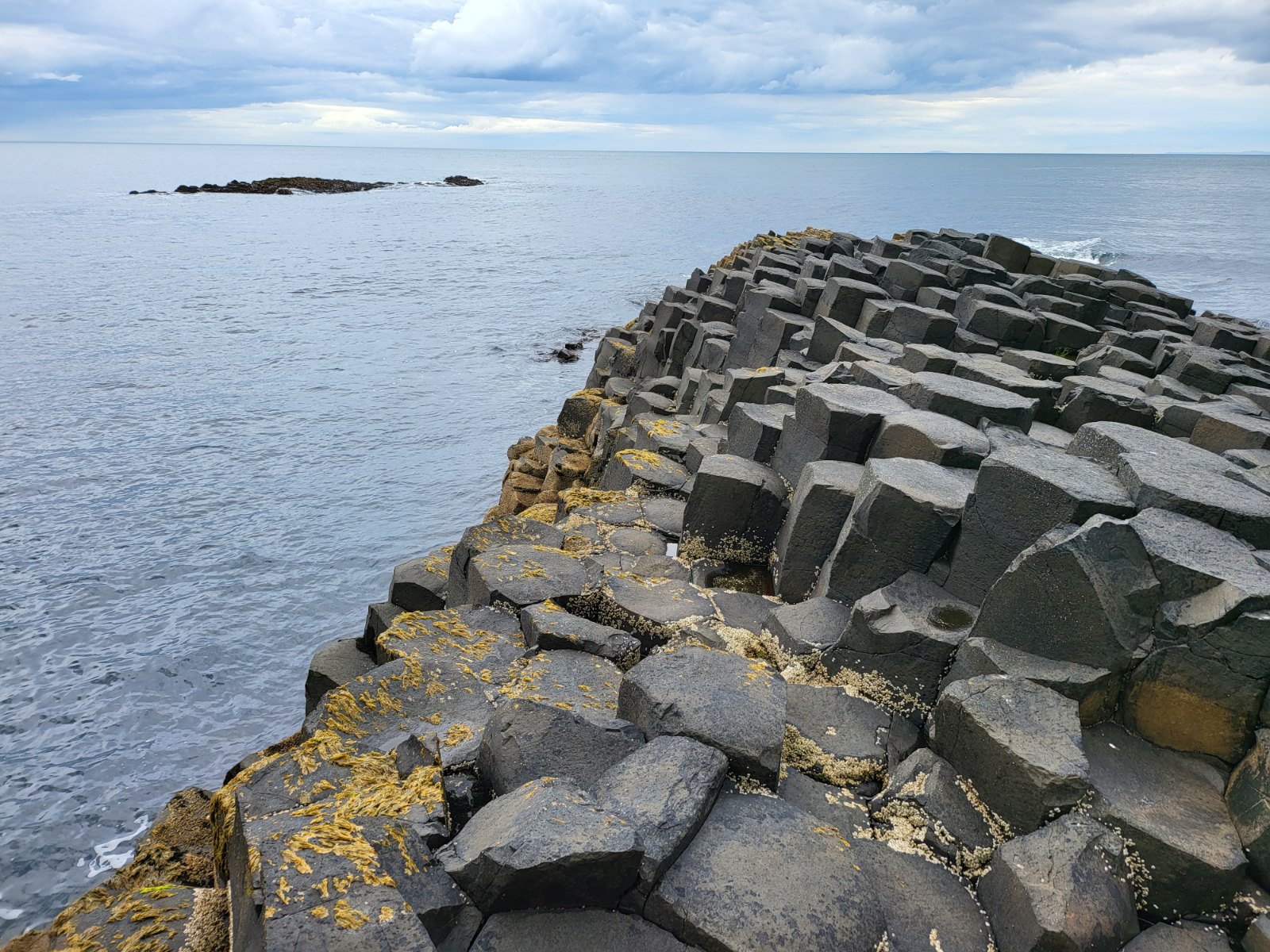
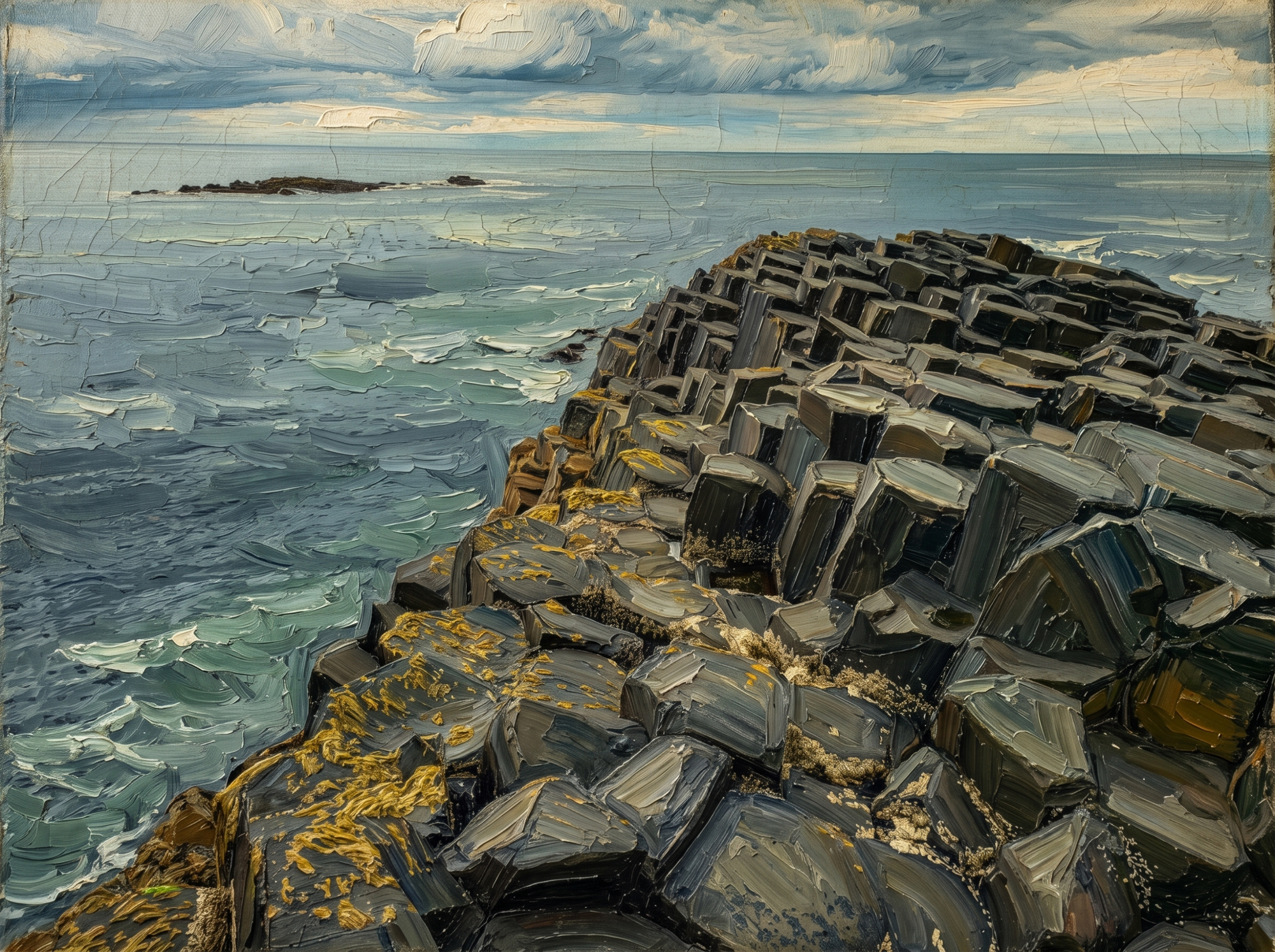
Giant's Causeway stretches toward the sea in a field of dark hexagonal basalt, each stone column shaped by ancient volcanic force and softened by centuries of wind and tide. The rocks rise and fall like a natural pathway along the Northern Ireland coast, their weathered surfaces marked with shadow, sea air, and small touches of yellow lichen.
This is Northern Ireland's first UNESCO World Heritage Site and one of the most famous geological landmarks on the island of Ireland. More than 40,000 basalt columns line the coast, formed around 60 million years ago as volcanic lava cooled, contracted, and cracked into the interlocking shapes that make the Causeway instantly recognizable.
Beyond the stones, the ocean opens under a gray, cloud-filled sky. Blue-green water presses against the rugged shoreline, bringing movement to a place where the basalt itself stands solid and still. The contrast between calm distance and jagged foreground makes the coast feel grounded and wild at the same time, as if it is holding a long memory of fire, rain, and Atlantic weather.
The geology is part of the wonder, but so is the setting. The columns step toward the sea, disappear under the water, and reappear in cliffs and formations along the Causeway Coast. Some columns are nearly perfect hexagons, while others have four, five, seven, or eight sides, revealing the natural variation inside a process that feels almost designed.
The Giant's Causeway also carries a deep layer of folklore. In Irish legend, the stones are linked to the giant Finn McCool, whose story gives the landscape a mythic scale. Science and story sit side by side here: a real volcanic formation that still feels large enough for legend.
Dark stone, restless water, and heavy sky gather into one elemental coastal place. Every column seems to carry both the ancient force of lava and the continuing pull of the sea, making Giant's Causeway feel strong, textured, and alive with natural wonder.
How This Was Generated
To create a similar Giant's Causeway scene in FotoMedley, start with a coastal photo that has strong texture, clear rock shapes, and visible atmosphere.
- Choose the Oil Painting style for expressive brushwork, deep color, canvas-like texture, and a classic landscape-art feeling.
- Use a source photo where the basalt columns are easy to see, especially if their hexagonal shapes create a clear foreground pattern.
- Crop to preserve the relationship between land and sea: dark stone in front, ocean beyond, and enough sky to carry the coastal mood.
- Keep the original image high resolution so the column edges, lichen, wet stone, waves, and cloud layers remain readable after the painting transformation.
- Preview for depth and drama; the best result keeps the geology recognizable while letting the brush texture bring out the wildness of the shoreline.
For best results, choose photos with natural contrast, visible stone detail, and weather that adds character, such as overcast skies, sea mist, or waves moving against the basalt coast.