Free printable activity sheet
Turn your photos into sheets like this!
Upload any photo and apply our Coloring Book style to generate a custom printable sheet of your own.
Create My OwnPolar Bear Coloring Page
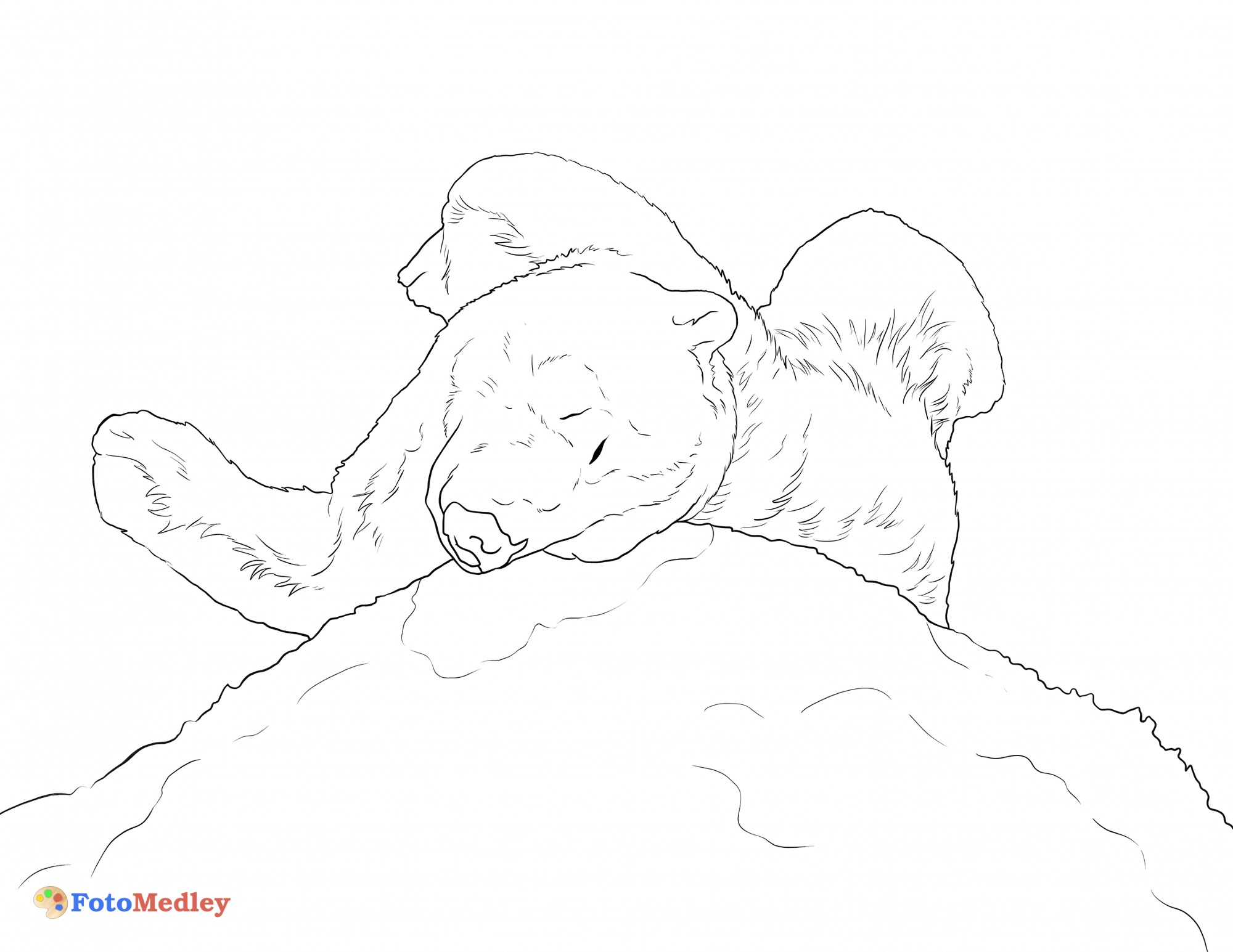
Color a polar bear in an Arctic scene with thick white fur, strong paws, sea ice, snow, and cold blue shadows.
About
Polar bears are large Arctic bears with thick fur, strong paws, and bodies adapted for cold environments. Their fur looks white, which helps them blend into snowy and icy habitats. Under the fur, their skin is dark, which helps absorb warmth from sunlight.
Polar bears are excellent swimmers and often travel across sea ice while searching for food. Sea ice is important because it gives them a platform for hunting, resting, and moving through their Arctic home.
This coloring page helps kids notice polar bear features such as thick fur, large paws, small ears, dark nose, and the icy habitat around them. Pale grays, blues, creams, and snow shadows can make the white fur stand out.
History & Culture
Polar bears are powerful symbols of the Arctic. Scientists study them closely because changes in sea ice can affect where and how they find food.
Learning about polar bears helps students think about cold-weather adaptations, ocean food webs, and how animals depend on habitats that may change over time.
Fun Facts
Polar bears have thick fur and a layer of fat to help them stay warm.
Their large paws help spread weight on snow and ice.
Polar bears are strong swimmers.
Sea ice is very important to polar bear survival.
A Thought to Carry With You
"Even in a cold world, warmth can come from careful attention."
Activities & Discussion
- 1
Color the Bear
Use soft whites, creams, pale grays, and blue shadows to color the polar bear's fur and shape.
- 2
Ice Habitat
Draw snow, ice floes, clouds, and cold water around the polar bear.
- 3
Bear Feature Labels
Label the paws, fur, nose, ears, and icy ground, then write one cold-weather adaptation.