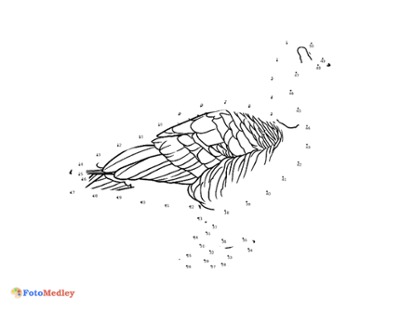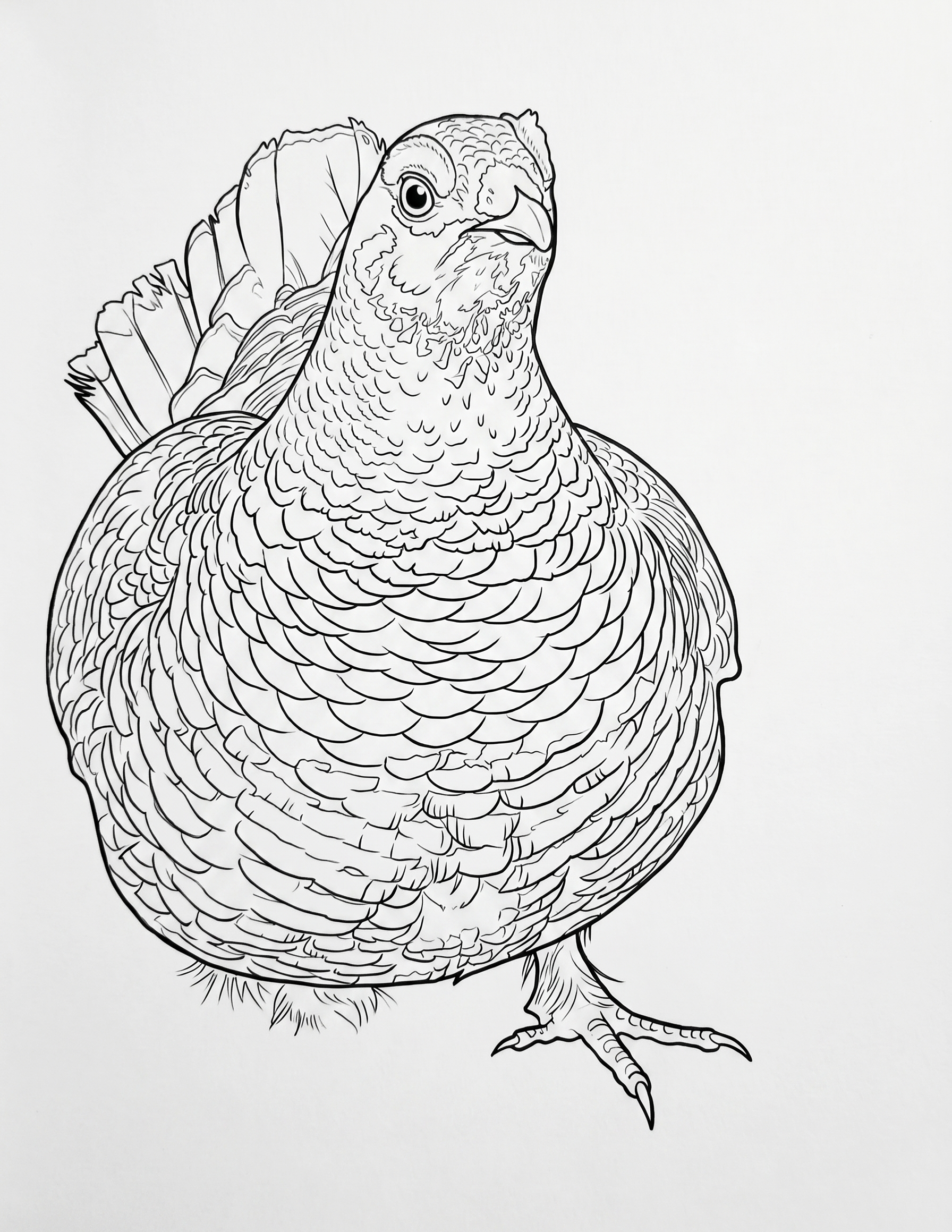
Free printable activity sheet
Turn your photos into sheets like this!
Upload any photo and apply our Coloring Book style to generate a custom printable sheet of your own.
Create My OwnSpruce Grouse Activity Sheet
Meet a quiet northern forest bird with speckled camouflage, feathered feet, and a taste for spruce needles.
About
The spruce grouse is a chicken-like forest bird that lives in northern conifer forests. It is often found around spruce, fir, pine, and other evergreen trees. Its speckled brown, gray, black, and white feathers help it blend into branches, needles, bark, and shadowy forest ground.
Spruce grouse eat many plant foods, including berries, leaves, buds, and insects during warmer months. In winter, they can eat large amounts of evergreen needles, especially from spruce and pine. Their feathered feet help them walk in cold, snowy places.
These birds are usually quiet and may stay still instead of flying away right away. That camouflage strategy can make them hard to notice, even when they are nearby. Looking carefully at patterns, colors, and habitat clues helps students understand how a spruce grouse survives in the forest.
History & Culture
Spruce grouse have long been part of boreal and mountain forest ecosystems across northern North America. Indigenous peoples, hunters, birdwatchers, and naturalists have observed how these birds use evergreen forests through changing seasons.
Because spruce grouse depend on forest habitat, changes to forests can affect where they live. Learning about them also teaches students about conifer forests, winter adaptation, camouflage, and the connections between birds and plants.
Fun Facts
Spruce grouse can eat evergreen needles during winter.
Their mottled feathers help them blend into forest shadows and branches.
Feathered feet help spruce grouse handle cold, snowy ground.
Male spruce grouse may show bright red eyebrow combs during display season.
A Thought to Carry With You
"Quiet observation can reveal details that hurried eyes miss."
Activities & Discussion
- 1
Camouflage Colors
Use browns, grays, black, white, and soft rusty tones to help the spruce grouse blend into bark, needles, and forest shadows.
- 2
Forest Habitat Labels
Draw spruce branches, cones, snow, berries, and fallen needles around the bird. Label three habitat features the grouse could use for food or cover.
- 3
Adaptation Match
Circle or label the grouse's feathered feet, speckled feathers, short bill, and sturdy body. Write one note about how each feature helps it survive.