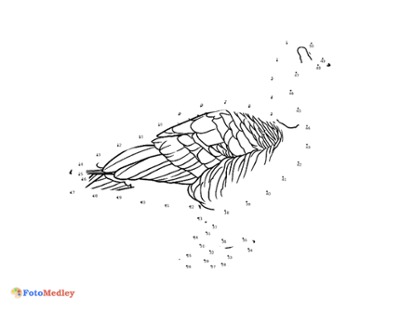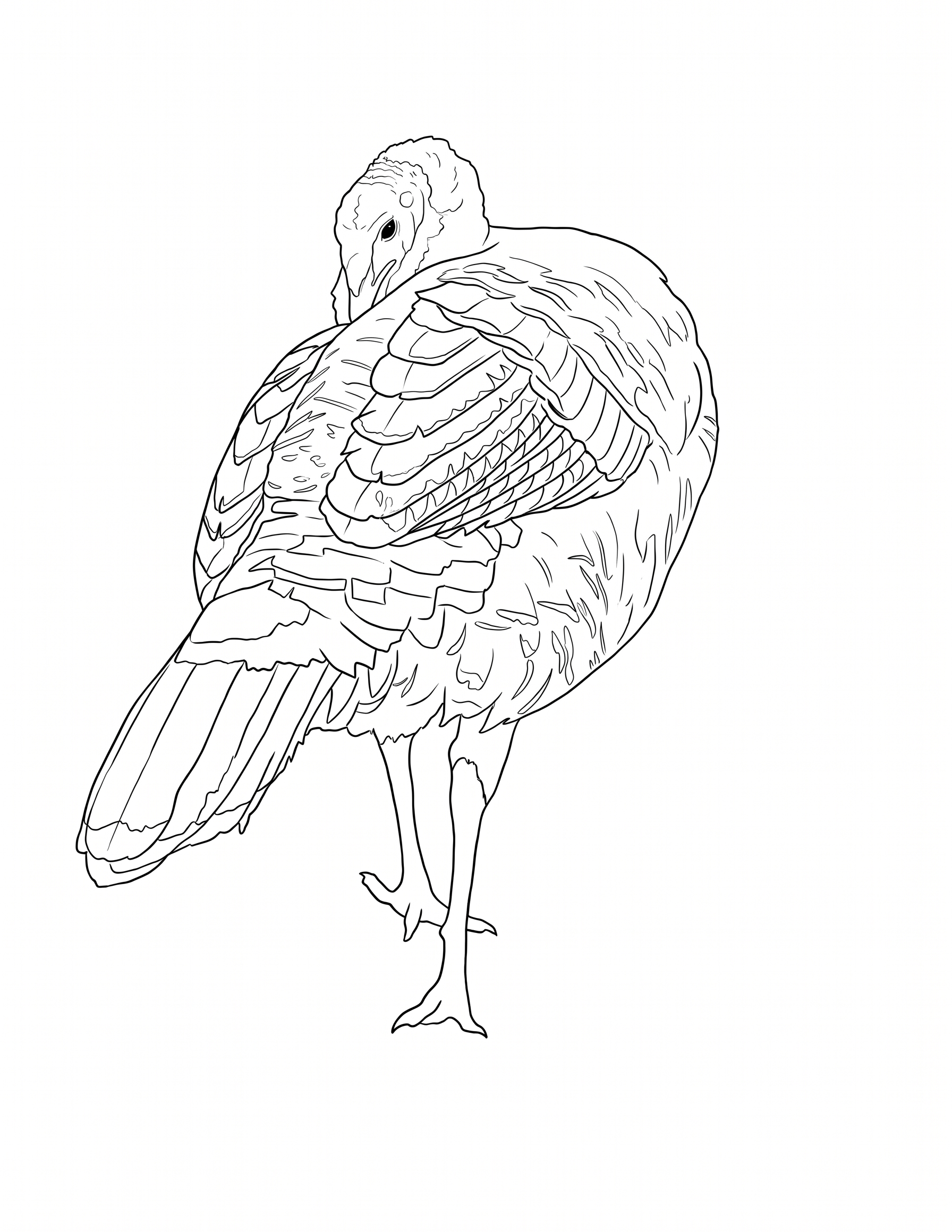
Free printable activity sheet
Turn your photos into sheets like this!
Upload any photo and apply our Coloring Book style to generate a custom printable sheet of your own.
Create My OwnThe Wild Turkey
Explore a big woodland bird known for its fan-shaped tail, strong legs, and gobbling calls.
About
The wild turkey is a large bird native to North America. It lives in forests, woodland edges, grasslands, and open areas where it can find food and shelter. Male turkeys, called toms or gobblers, are known for spreading their tail feathers into a fan during displays.
Wild turkeys spend much of their time walking on strong legs while searching for food. They eat acorns, seeds, berries, insects, grasses, and other small foods they find on the ground. Although they are heavy birds, wild turkeys can fly short distances, especially to reach tree branches where they roost at night.
A turkey's feathers can look brown from far away, but up close they may shine with bronze, green, copper, and black. Their calls, tracks, feathers, and scratch marks can all give clues that turkeys are nearby.
History & Culture
Wild turkeys have been important birds in North American ecosystems and cultures for a long time. They were once much less common in many areas because of habitat loss and overhunting.
Conservation efforts, hunting rules, habitat work, and reintroduction programs helped wild turkey populations recover across much of their range. Today, they are one of North America's best-known wildlife recovery stories.
Fun Facts
Male wild turkeys can spread their tail feathers into a wide fan.
Wild turkeys roost in trees at night to stay safer from predators.
Their feathers can shimmer with bronze, green, copper, and black colors.
Wild turkeys scratch the ground with their feet while searching for food.
A Thought to Carry With You
"A proud display can remind us how wonderful ordinary wildlife can be."
Activities & Discussion
- 1
Feather Fan Pattern
Draw or color a big fan-shaped turkey tail. Add repeating bands, spots, or feather tips to make the display stand out.
- 2
Turkey Clue Hunt
Add three clues that a wild turkey has visited the area: tracks, scratched leaves, feathers, or acorn shells.
- 3
Habitat Scene
Place your turkey near woodland edges with trees, grasses, berries, and acorns. Label two things it might eat and one place it could roost.